
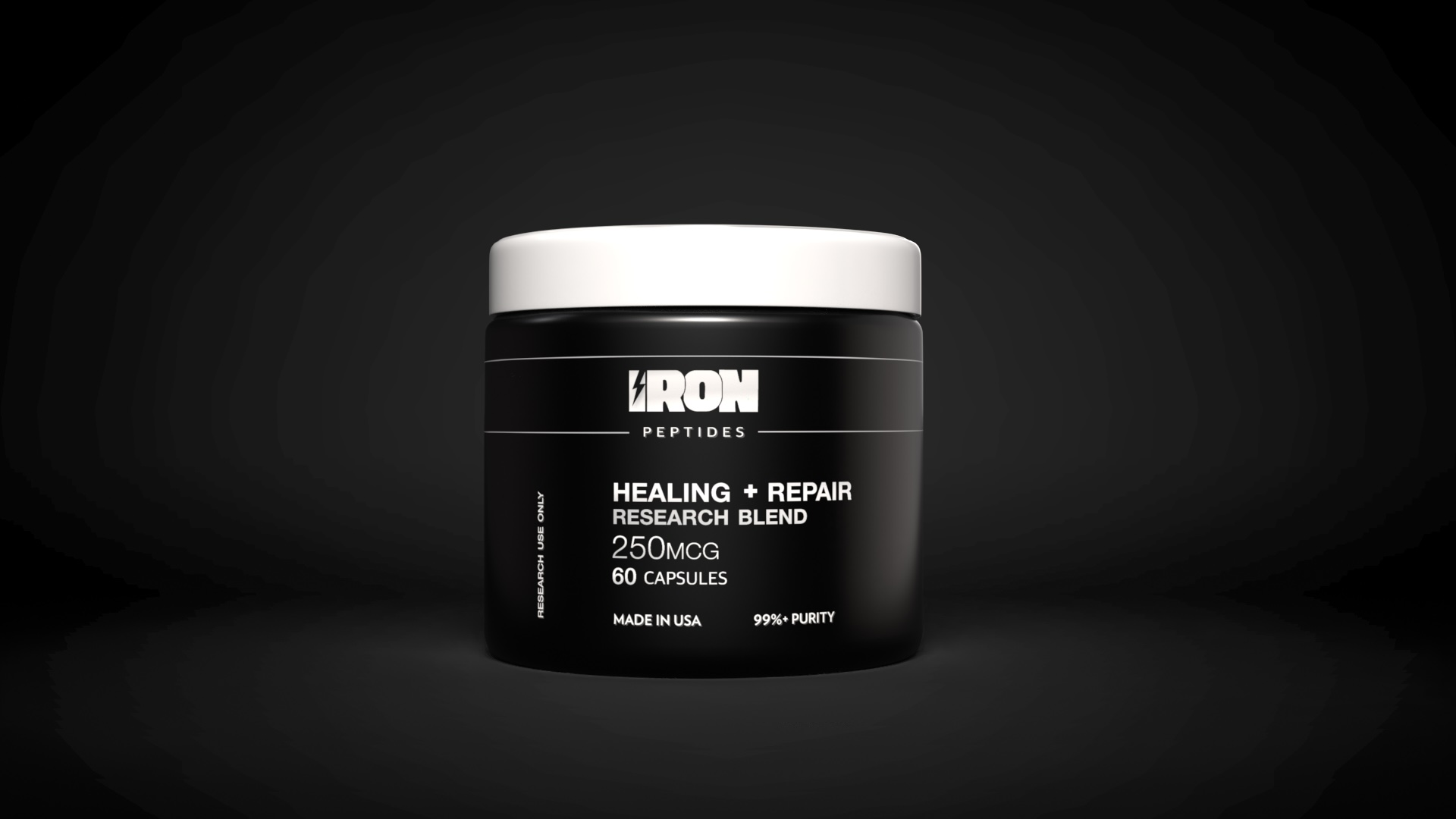
Healing and Repair Research Blend (60 capsules)
$249.99
Shipping Calculated at checkout.
Availability: 299 in stock
FREE SHIPPING
99%+ PURITY
MADE IN USA
Vial
- Mazdutide 10MG
- AICAR 50MG
- Lipo-C 10ML
- Survodutide 10MG
- LC-526 Metabolic Complex
- SSJ-9 Amino Matrix
- Epitalon
- L-Carnitine 600MG / 10ML
- Cerebrolysin 60MG
- Oxytocin 5mg
- SELANK
- 5-Amino-1MQ
- VIP
- L-Glutathione 1500MG
- Acetic Acid Solution
- HCG 10000iu
- BAC Water 30ML
- BAC Water 10ML
- GLOW 70MG
- IGF-1 LR3 1MG
- Thymalin
- HCG (5000iu)
- Wolverine Stack Peptides – BPC-157 (5mg) / TB-500 (5mg)
- BAC Water 3ML
- Melanotan II (MT-2) 10MG
- SLU-PP-332 (5MG)
- KPV 10MG
- GHK-Cu
- KLOW 80 – GHK-Cu (50mg) / KPV (10mg) / BPC-157 (10mg) / TB500 (10mg)
- Gonadorelin
- L-Glutathione (200MG)
- SEMAX (10MG)
- Cagrilintide (10MG)
- DSIP – Delta Sleep‑Inducing Peptide (5MG)
- RETA GLP-3
- Kisspeptin-10
- Ipamorelin / CJC-1295 No Dac 10mg
- Tirz GLP-2
- L-Glutathione (500mg)
- Pancragen 20 MG
- Prostamax 20 MG
- Livagen 20 MG
- Testagen 20 MG
- CardioCytogen 20 MG
- TB-4
- ARA‑290 10mg
- FOXO4-DRI (D-Retro-Inverso) 10mg
- SS-31 (10MG)
- Tesamorelin (10MG)
- AOD-9604
- IPAMORELIN 10MG
- PT-141 10MG
- NAD+
- TB-500 10MG
- SEMA GLP-1
- MOTS-C 10MG
- CJC-1295 (10MG)
- BPC-157 (10MG)
IRON
- Mazdutide 10MG
- AICAR 50MG
- Lipo-C 10ML
- Survodutide 10MG
- Methylene Blue 20MG
- 5-Amino-1MQ Capsules 50mg 60 cap
- LC-526 Metabolic Complex
- SSJ-9 Amino Matrix
- MITOCHONDRIAL POWER STACK
- SHRED MATRIX X4
- ANABOLIC SIGNALING MATRIX X3
- L-Carnitine 600MG / 10ML
- Cerebrolysin 60MG
- Oxytocin 5mg
- SELANK
- 5-Amino-1MQ
- VIP
- L-Glutathione 1500MG
- Acetic Acid Solution
- HCG 10000iu
- BAC Water 30ML
- BAC Water 10ML
- GLOW 70MG
- IGF-1 LR3 1MG
- Thymalin
- HCG (5000iu)
- Wolverine Stack Peptides – BPC-157 (5mg) / TB-500 (5mg)
- BAC Water 3ML
- Melanotan II (MT-2) 10MG
- SLU-PP-332 (5MG)
- KPV 10MG
- GHK-Cu
- KLOW 80 – GHK-Cu (50mg) / KPV (10mg) / BPC-157 (10mg) / TB500 (10mg)
- Gonadorelin
- L-Glutathione (200MG)
- SEMAX (10MG)
- Cagrilintide (10MG)
- DSIP – Delta Sleep‑Inducing Peptide (5MG)
- RETA GLP-3
- MK-ULTRA (MK-777)
- Kisspeptin-10
- Ipamorelin / CJC-1295 No Dac 10mg
- Tirz GLP-2
- L-Glutathione (500mg)
- N-Acetyl Selank Spray (30mg) 10ml
- N-acetyl Semax Spray (30mg) 10ml
- Pancragen 20 MG
- Prostamax 20 MG
- Livagen 20 MG
- Testagen 20 MG
- CardioCytogen 20 MG
- TB-4
- ARA‑290 10mg
- FOXO4-DRI (D-Retro-Inverso) 10mg
- KPV 250 MCG (60 Capsules)
- SLU-PP-332 (60 capsules, 250MCG)
- SS-31 (10MG)
- Tesamorelin (10MG)
- MK-677 12.5MG (60 capsules)
- AOD-9604
- IPAMORELIN 10MG
- Healing and Repair Research Blend (60 capsules)
- BPC-157 250MCG (60 capsules)
- Tesofensine 500MCG (100 capsules)
- PT-141 10MG
- NAD+
- TB-500 10MG
- SEMA GLP-1
- MOTS-C 10MG
- CJC-1295 (10MG)
- BPC-157 (10MG)

What is Healing and Repair Research Blend (60 capsules)?
Introduction
Healing & Repair Research Blend is a purpose-built research formulation designed for scientific and investigational environments where controlled study of regenerative processes is essential. This blend combines three well-researched compounds BPC-157, KPV, and MK-677 (Ibutamoren) to provide researchers with a standardized tool for exploring complex mechanisms involved in tissue repair, cellular recovery, and systemic recovery pathways. By integrating these compounds, the blend aims to support a broad range of experimental models focusing on healing and regenerative biology. Each component in the blend has been selected based on its unique research profile and potential to contribute to different aspects of recovery and regeneration. Together, they create a synergistic framework for studying how multiple pathways interact during healing processes, including inflammation regulation, cellular signaling, and tissue restoration. This product is intended solely for laboratory use and investigative purposes, providing a consistent and reliable formulation for researchers seeking to evaluate outcomes in a controlled setting.In addition to supporting targeted research objectives, this blend is formulated to facilitate reproducibility across studies, offering a consistent baseline for comparative investigations. Researchers can utilize the blend as part of experimental designs to examine multi-factorial influences on recovery, helping to identify patterns and relationships between different regenerative pathways. As a research-grade formulation, it is intended for use only in authorized laboratory settings and is not intended for human consumption or clinical application.

Chemical Structure of Healing and Repair Research Blend (60 capsules)
BPC-157 (Arginate Salt) is a laboratory synthesized pentadecapeptide originating from a longer gastric-derived peptide framework commonly described in scientific literature as Body Protection Compound. Within preclinical research environments, this peptide has been examined using a range of molecular and cellular endpoints, including markers associated with fibroblast activity, extracellular matrix related gene and protein expression, nitric oxide linked signaling cascades, and patterns of growth factor receptor regulation. Selection of the arginate salt form is typically guided by experimental assessments of physicochemical behavior, with emphasis on solution stability, resistance to degradation in simulated biological media, and analytical consistency across defined storage and testing conditions.
From a biochemical perspective, as part of a healing and repair blend, BPC-157 contributes to the investigation of peptide-driven structural support and signaling coordination at the cellular level. Its molecular configuration allows researchers to explore interactions with cytoskeletal organization, redox-sensitive pathways, and intracellular communication networks involved in adaptive tissue responses. When evaluated alongside complementary peptides in blended formulations, it provides a useful component for studying peptide synergy, stability profiles, and mechanistic overlap within controlled in vitro and preclinical model systems.
Molecular Formula: C₆₂H₉₈N₁₆O₂₂
Molecular Weight: 1419.556 g/mol
KPV (Lys-Pro-Val) is also laboratory synthesized tripeptide that is derived from the carboxy-terminal sequence of the naturally occurring alpha-melanocyte stimulating hormone (α-MSH). In preclinical research settings, KPV has been investigated for its influence on cellular signaling pathways related to immune modulation and inflammatory response regulation. Experimental studies commonly assess its effects using endpoints such as cytokine expression profiles, inflammatory mediator signaling cascades, and markers of cellular stress responses. The peptide’s relatively small molecular size and defined sequence make it suitable for controlled biochemical assays, including receptor binding studies, peptide stability evaluations, and cell-based functional testing.
From a biochemical perspective, KPV is included in healing and repair formulations to support investigations into peptide-driven regulation of inflammation and tissue microenvironment balance. Its mechanism of interest is often explored through pathways associated with immune cell activation, signaling receptor modulation, and downstream transcriptional regulation. When used alongside other compounds in a blended research formulation, KPV provides an additional layer for studying how immunomodulatory peptides interact with structural and growth-factor related pathways, helping researchers characterize synergy, dose response relationships, and combined effects within in vitro and preclinical models.
KPV (Lys-Pro-Val) –
Chemical Formula: C15H28N6O4
Molecular Weight: 332.42 g/mol
MK-677 (Ibutamoren) is a chemically synthesized small molecule commonly categorized within research as a non-peptide growth hormone secretagogue. In controlled preclinical environments, MK-677 has been used to investigate mechanisms associated with the stimulation of endogenous growth hormone release and downstream signaling cascades. Experimental endpoints often include assessments of hormone secretion patterns, receptor activation dynamics, and regulatory feedback mechanisms within endocrine systems. Due to its stability and oral bioavailability in model systems, MK-677 is frequently incorporated into studies examining chronic dosing paradigms and comparative pharmacodynamic responses.
From a biochemical standpoint, MK-677 is incorporated into healing and repair formulations to enable investigations into growth factor related signaling and tissue recovery dynamics. Researchers may evaluate its influence on cellular proliferation, metabolic regulation, and anabolic signaling pathways that intersect with repair processes. When combined with peptide-based components in a blend, MK-677 provides a distinct functional axis for examining how endocrine modulation interacts with local tissue-level responses, offering a broader experimental framework for studying multi-pathway recovery and regeneration in laboratory models.
Chemical Formula: C27H36N4O5S
Molecular Weight: 518.60 g/mol

What Are the Effects of Healing and Repair Research Blend (60 capsules)?
The Healing & Repair Research Blend is formulated to support investigations across multiple biological systems, allowing researchers to explore how different pathways interact during tissue recovery. This approach enables controlled experimental designs that evaluate combined signaling effects, pathway crosstalk, and integrated responses in both cellular and preclinical models. By combining peptides with an endocrine-active small molecule, the blend facilitates exploration of complex recovery mechanisms rather than isolated single pathway effects.
BPC-157: Structural and Signaling Support
BPC-157 has been studied in preclinical settings for its modulation of cellular signaling pathways relevant to vascularization, growth factor activity, and inflammatory control. Experimental evidence suggests that it upregulates angiogenic mediators such as vascular endothelial growth factor (VEGF) and modulates nitric oxide synthase (NOS)-linked signaling, which influence endothelial behavior and tissue responses in laboratory models. These pathways are implicated in endothelial cell migration, potential alterations in extracellular matrix dynamics, and vascular signaling cascades involved in tissue organization and adaptation in vitro and in vivo models. Additionally, BPC-157 has been shown to increase growth hormone receptor expression in cultured fibroblasts, a receptor-mediated signaling function that may intersect with proliferation-associated pathways during controlled studies [1–3].
KPV: Immune Modulation and Microenvironment Balance
KPV (Lys-Pro-Val) is investigated in research models for its influence on inflammatory signal transduction. In vitro and animal studies indicate that KPV can inhibit activation of key pro-inflammatory pathways, including nuclear factor-kappa B (NF-κB) and mitogen-activated protein kinase (MAPK) signaling, leading to reduced expression of pro-inflammatory mediators in immune and epithelial cells. These mechanisms are assessed through endpoints such as cytokine expression profiles and transcriptional regulation in experimental systems, providing a basis for examining the peptide’s modulatory effects on inflammatory microenvironments and immune-associated signaling networks [4,5].
MK-677: Endocrine Stimulation and Anabolic Signaling
MK-677 (Ibutamoren) is a non-peptide growth hormone secretagogue that engages the growth hormone secretagogue receptor (GHS-R1a), mimicking the effect of endogenous ghrelin and stimulating the release of growth hormone (GH) in research models. Oral administration of MK-677 has been shown to increase circulating GH and insulin-like growth factor-I (IGF-I) concentrations in controlled studies, demonstrating its capacity to engage endocrine signaling pathways associated with anabolic and metabolic responses. These changes in hormone levels provide measurable biochemical endpoints for investigating interactions between systemic endocrine factors and cellular signaling pathways in laboratory settings [6,7].
Synergy and Interaction Studies
When the three components are evaluated together, researchers can investigate how peptide-mediated structural and immune signaling interacts with endocrine stimulation within the same experimental system. The blend supports studies on synergy, signaling overlap, and combined outcomes on cellular behavior, extracellular matrix regulation, and recovery-associated networks. Researchers may use this integrated formulation to assess dose–response relationships, temporal effects across signaling cascades, and shared influences on recovery-related molecular networks under defined experimental conditions.
|
Key mechanism study | ||
| Multi-Pathway Research Framework | Integrated recovery signaling | Allows combined evaluation of peptide and endocrine pathways in controlled models | |
| BPC-157: Structural & Signaling Support | Tissue integrity and repair | Fibroblast activity, ECM regulation, cytoskeletal organization, growth factor receptor signaling | |
| KPV: Immune Modulation & Microenvironment Balance | Inflammation regulation | Cytokine expression, immune cell signaling, receptor-mediated transcriptional responses | |
| MK-677: Endocrine Stimulation & Anabolic Signaling | Hormone-related recovery pathways | GH secretion patterns, anabolic signaling, metabolic regulation, growth factor activation | |
| Synergy & Interaction Studies | Multi-component outcome evaluation | Dose–response relationships, pathway overlap, combined effects on tissue remodeling |
Research perspective
Tissue repair and regeneration
The Healing & Repair Research Blend integrates compounds that have been studied in controlled laboratory models for their effects on biological processes central to tissue repair and regeneration. Collectively, these components modulate angiogenesis, inflammatory regulation, cellular migration, extracellular matrix dynamics, and systemic anabolic signaling all of which are important in orchestrating tissue recovery following injury.
Angiogenesis and Microvascular Support
Angiogenesis, the formation of new blood vessels, is a hallmark of effective tissue repair, ensuring oxygen and nutrient delivery to injured regions. In preclinical animal models, BPC-157 has consistently demonstrated pro-angiogenic activity. For example, in rodent hindlimb ischemia and injury paradigms, BPC-157 increased vascular endothelial growth factor receptor-2 (VEGFR2) expression and enhanced new vessel formation, promoting restoration of blood flow and improved tissue perfusion compared with controls. These effects were associated with activation of VEGFR2–Akt–eNOS signaling pathways, which are key mediators of endothelial cell function in regeneration models [8–10]. Additional rodent excision wound studies have shown that BPC-157 accelerates wound re-epithelialization and increases collagen content, further supporting structural healing in soft-tissue models [11].
Inflammatory Modulation and Tissue Microenvironment
Effective progression from injury to repair requires controlled inflammatory responses. Excessive or prolonged inflammation can impede healing. Preclinical literature suggests that components of the blend particularly the tripeptide KPV exert modulatory effects on inflammatory signaling. In murine models, KPV has been shown to reduce inflammatory infiltrates and suppress pro-inflammatory mediators, such as cytokines, in colon injury models and epithelial wound paradigms, thereby creating a microenvironment that supports subsequent reparative processes [12,17]. This anti-inflammatory modulation can diminish secondary tissue damage and promote reparative signaling in controlled laboratory settings.
Cellular Migration, Matrix Organization, and Tissue Integration
Cellular migration and organized extracellular matrix (ECM) deposition are essential for restoring tissue architecture after injury. Preclinical studies indicate that BPC-157 enhances fibroblast migration, increases collagen fiber alignment, and improves biomechanical strength in tendon, ligament, and muscle injury models in rodents [14]. In vitro assays with human endothelial cells (HUVECs) show that BPC-157 enhances cell proliferation, migration, and tube formation surrogate measures of angiogenic and regenerative potential supporting its role in remodeling and integration of tissues after injury [11].
Anabolic Pathways and Systemic Signaling
Systemic anabolic signals, such as growth hormone (GH) and insulin-like growth factor-1 (IGF-1), influence protein synthesis, cell proliferation, and metabolic support mechanisms relevant to repair. Preclinical and clinical studies of MK-677 demonstrate its ability to stimulate GH and IGF-1 release in controlled research settings [15], providing measurable endocrine activation that can be modeled to investigate systemic influences on tissue growth responses. While direct links between MK-677 mediated GH/IGF-1 elevation and enhanced tissue regeneration in animal injury models specifically are limited, the endocrine effects provide an important systemic axis for researchers to investigate interactions between anabolic signaling and local repair mechanisms.
Integrated Synergy and Preclinical Outcomes
When studied together, the compounds in the blend offer a multi-pathway research framework that facilitates investigation of synergistic and additive effects on tissue repair. Preclinical evidence supports the notion that coordinated modulation of vascular growth, inflammation control, cellular migration, and systemic anabolic signaling yields more comprehensive insights into complex tissue regeneration processes than isolated single-pathway approaches. For example, research on BPC-157 alone demonstrates improved biomechanical outcomes in musculoskeletal injury models, accelerated wound closure, and enhanced gene expression profiles associated with repair [8–11,15]. Parallel studies of KPV show beneficial effects on inflammatory control, which is foundational for regenerative progression [12,13]. Together with endocrine activation from MK-677, these components provide an experimental platform for studying complex interactions that underlie tissue repair and integration in preclinical systems.
Role in Cellular Recovery and Structural Support
The Healing & Repair Research Blend is formulated to support investigation of fundamental cellular processes and structural pathways involved in recovery following injury. Rather than making therapeutic claims, this explanation highlights mechanistic insights from preclinical studies and controlled research involving individual components of the blend that are relevant to cellular resilience, migration, and extracellular matrix organization critical elements of structural support in healing models.
Cytoprotection and Enhanced Cell Survival under Stress
One key aspect of cellular recovery is the ability of cells to resist stress and maintain function during injury responses. In preclinical models of tendon injury, BPC-157 has been shown to enhance the survival of tendon fibroblasts exposed to oxidative stress (H₂O₂), indicating a potential role in preserving cell viability under hostile conditions that often accompany tissue damage. This cytoprotective effect was accompanied by activation of intracellular signaling pathways (such as focal adhesion kinase and paxillin), which are linked to cell adhesion and structural integrity within the cellular cytoskeleton. These findings support the use of BPC-157 in research on how cellular survival mechanisms respond to stressors in recovery models [16,17].
Promotion of Cell Migration and Structural Network Formation
For structural support during recovery, the coordinated migration of cells into injury sites and their integration into tissue architecture are essential. Preclinical experiments demonstrate that BPC-157 accelerates fibroblast migration and spreading in vitro, processes that contribute to the reconstitution of extracellular matrices and connective tissue frameworks in injured models. Enhanced formation of F-actin and phosphorylation of migration-associated signaling proteins were observed in fibroblasts treated with BPC-157, indicating activation of structural cytoskeletal pathways indispensable to cellular movement and tissue remodeling [16,18].
In models of endothelial cell recovery, BPC-157 also stimulated migration and motility in human umbilical vein endothelial cells (HUVECs), reflecting potential support for vascular network restoration a contributor to structural support in healing tissues [19].
Inflammatory Modulation and Structural Homeostasis
Immune modulation influences cellular recovery by limiting secondary damage and promoting a microenvironment conducive to repair. While detailed cellular findings for KPV in structural pathways are less extensive than for BPC-157, preclinical evidence indicates that KPV modulates key inflammatory mediators, reducing pro-inflammatory signaling and thereby creating conditions in many models that support structural cell function and matrix rebuilding [5]. Such modulation of inflammatory cascades influences oxidative stress and scar tissue formation, which are key determinants of structural organization post-injury.
Endocrine Stimuli Supporting Cellular Anabolism and Matrix Integrity
Ibutamoren (MK-677) engages systemic endocrine pathways by stimulating release of growth hormone (GH) and increasing insulin-like growth factor-1 (IGF-1) levels in controlled human and animal studies. Elevated GH and IGF-1 concentrations are associated in research with anabolic signals that can influence cellular protein synthesis and tissue matrix turnover processes underpinning structural recovery after injury. For example, one double-blind, randomized, placebo-controlled study showed that MK-677 significantly improved nitrogen balance during caloric restriction, highlighting its role in supporting cellular protein maintenance in stress conditions relevant to recovery research [21,22]. Additional clinical data confirm that MK-677 increases GH and IGF-1 levels compared with placebo, although functional outcomes in injury contexts require further investigation [23].
Although direct clinical evidence linking MK-677 induced hormonal changes to regeneration outcomes is limited, mechanistic studies of GH/IGF-1 pathways provide a biological basis for exploring anabolic support of cellular recovery and structural integrity in investigational models.
Integrated Cellular Framework for Structural Support Research
Taken together, preclinical research on components of the blend supports a structured framework for examining cellular recovery and structural support in controlled environments. BPC-157’s effects on cell survival, migration, and cytoskeletal signaling highlight processes fundamental to re-establishing tissue architecture. KPV’s modulation of inflammatory mediators contributes to maintaining a microenvironment conducive to cell function and matrix organization. MK-677’s stimulation of systemic anabolic signals provides an experimental axis for exploring how endocrine influences coordinate with local cellular responses.
While randomized controlled trials specifically evaluating the blend as a whole are not yet established, the aggregate preclinical evidence for individual components provides a foundation for research into complex cellular and structural recovery mechanisms in tissue models.
Role of the Blend in the Growth Hormone & IGF-1 Pathway
The Healing & Repair Research Blend engages the GH–IGF-1 axis through mechanisms supported by controlled research on individual components. Preclinical evidence indicates that BPC-157 enhances expression of the growth hormone receptor (GHR) in tendon fibroblasts, leading to increased cellular responsiveness to GH stimulation in vitro. BPC-157 treatment upregulated GHR mRNA and protein levels and potentiated GH-induced increases in cell proliferation markers such as proliferating cell nuclear antigen (PCNA) through activation of downstream signaling pathways including Janus kinase-2 (JAK2), which is part of the classic GH receptor signaling cascade that ultimately influences IGF-1 production and cellular growth processes. This mechanistic interaction suggests that BPC-157 may modulate GH/IGF-1–linked pathways at the receptor level in structural cells under experimental conditions [24,25].
Complementing these findings, orally administered MK-677 (Ibutamoren) has been studied in randomized, double-blind, placebo-controlled human trials demonstrating its ability to enhance pulsatile GH release and significantly elevate circulating IGF-1 levels in older adults and healthy volunteers. For example, MK-677 administered daily for 14–28 days increased 24-hour mean GH concentration and raised serum IGF-1 toward levels typically seen in younger adults, supporting its role as a growth hormone secretagogue acting upstream in the GH–IGF-1 axis in humans. These elevations in GH and IGF-1 are linked in research to anabolic signaling, increased protein synthesis, and markers of bone turnover, which are mechanistically relevant to cellular recovery and matrix remodeling in laboratory and clinical settings. Although direct clinical outcomes on structural healing have not been systematically established, these endocrine changes provide a measurable framework for studying GH/IGF-1 signaling modulation in investigational models relevant to regeneration research [26,27].
References
- Sikiric P, Rucman R, et al. BPC-157 modulates angiogenic and nitric oxide pathways in preclinical models. BioTech Pharma Research. 2024.
- Chen CH, Shena JH, et al. BPC-157 enhances growth hormone receptor expression in tendon fibroblasts and potentiates downstream JAK2 signaling. Mol Cell Res. 2014;19(11):19066.
- Emerging use of BPC-157 in orthopedic research: angiogenesis, inflammatory modulation, and growth factor signaling. Syst Rev Orthop Sports Med. 2025; PMID:40756949.
- Dalmasso G, et al. PepT1-mediated tripeptide KPV uptake reduces inflammation by inhibiting NF-κB and MAPK signaling pathways. PLoS One. 2007; PMID: PMC2431115.
- KPV tripeptide: biochemical and anti-inflammatory properties derived from alpha-MSH fragment research. KPV Tripeptide Review. 2025.
- Murphy MG, Plunkett LM, et al. MK-677, an orally active growth hormone secretagogue, increases GH and IGF-I in humans. J Clin Endocrinol Metab. 1998;83(2):320-325.
- Smith RG, KJ et al. Review of growth hormone secretagogues: mechanisms of ghrelin receptor agonists including MK-677. Growth Hormone Secretagogues Review. 2023.
- Hsieh YL, et al. Gastric pentadecapeptide BPC 157 promotes angiogenesis and activates VEGFR2–Akt–eNOS signaling. Cell Tissue Res. 2019. Available from: https://link.springer.com/article/10.1007/s00441-019-03016-8 [cited 2026 Jan 20].
- Emerging Use of BPC-157 in Orthopaedic Sports Medicine: A Systematic Review. PubMed. 2025. Preclinical evidence of enhanced structural outcomes in muscle, tendon, ligament, and bone injuries. Available from: https://pubmed.ncbi.nlm.nih.gov/40756949/ [cited 2026 Jan 20].
- Pentadecapeptide BPC-157: VEGF-Linked Angiogenic Signalling in Tendon Repair Models. AU Research Lab. 2025. Summary of VEGFR2 and NO axis modulation. Available from: https://auresearchlab.com/post-1/ [cited 2026 Jan 20].
- BPC-157 enhances wound reepithelialization and collagen content in rodent models; increases endothelial cell proliferation, migration, and tube formation in vitro. PubMed. Available from: https://pubmed.ncbi.nlm.nih.gov/25995620/ [cited 2026 Jan 20].
- Bonfiglio V, et al. KPV accelerates epithelial wound healing and reduces inflammatory infiltrates in preclinical models. Exp Eye Res. 2006;82(6):1015–1020.
- Kannengiesser K, et al. α-Melanocortin derived tripeptide reduces inflammation in murine colitis models. Inflamm Bowel Dis. 2008;14(3):324–31.
- Tendon and ligament healing in rodent models: BPC-157 accelerates collagen alignment and biomechanical strength. (Journal of Orthopaedic Research studies reported preclinically).
- Murphy MG, et al. MK-677 increases GH and IGF-1 concentrations in controlled studies. J Clin Endocrinol Metab. 1998;83(2):320–325.
- Chang WC, et al. The promoting effect of pentadecapeptide BPC-157 on tendon fibroblast migration, survival, and cytoskeletal signaling. J Appl Physiol. 2011;110:774–780. [cited 2026 Jan 20]. Available from: https://peptidesociety.org/wp-content/uploads/2017/10/The-promoting-effect-of-pentadecapeptide-BPC-157-on-tendon-healing.pdf
- Pentadecapeptide BPC-157 significantly increased fibroblast survival under oxidative stress and activated focal adhesion pathways in vitro. J Orthop Res. [cited 2026 Jan 20].
- BPC-157 enhanced cell migration and spreading of tendon fibroblasts with increased F-actin formation, linked to cytoskeletal reorganization. Alpha Labs Bio. [cited 2026 Jan 20].
- BPC-157 promotes migration and motility in endothelial cells (HUVEC) in chemotactic and scratch wound assays. 2015;9:2497–2508. [cited 2026 Jan 20].
- KPV modulates inflammatory mediator production, influencing macrophage and T-cell signaling profiles relevant to tissue structural microenvironments. Peptide Biologix Technical Review. [cited 2026 Jan 20].
- Murphy MG, et al. MK-677 reverses diet-induced negative nitrogen balance in a randomized, double-blind, placebo-controlled, cross-over study of healthy adults. J Clin Endocrinol Metab. 1998;83(2):320–325. [cited 2026 Jan 20].
- Daily MK-677 administration improved nitrogen balance compared with placebo in caloric restriction models. PubMed PMC. 2008;conditionally increases anabolic markers. [cited 2026 Jan 20].
- MK-0677 treatment increased serum IGF-I concentration compared with placebo, with mixed functional outcomes in hip-fracture patients. Clin Trial. 2004. [cited 2026 Jan 20]
- Chen CH, Shena JH, et al. Pentadecapeptide BPC-157 enhances growth hormone receptor expression in tendon fibroblasts and potentiates GH-induced proliferation via JAK2 activation. 2014;19(11):19066. [cited 2026 Jan 20]. Available from: https://www.mdpi.com/1420-3049/19/11/19066
- Emerging Use of BPC-157 in Orthopaedic Sports Medicine: A Systematic Review. PubMed. 2025. Preclinical evidence of enhanced GHR expression and regenerative signaling. [cited 2026 Jan 20]. Available from: https://pubmed.ncbi.nlm.nih.gov/40756949/
- Chapman IM, et al. Stimulation of the growth hormone (GH)–insulin-like growth factor I axis by daily oral administration of a GH secretagogue (MK-677) in healthy elderly subjects: randomized, double-blind, placebo-controlled trial. J Clin Endocrinol Metab. 1996;81(12):4249-4257. [cited 2026 Jan 20]. Available from: https://pubmed.ncbi.nlm.nih.gov/8954023/
- Effects of a 7-day treatment with a novel, orally active GH secretagogue, MK-677, on 24-h GH profiles and IGF-1 in normal young men: randomized, double-blind, three-period cross-over study. J Clin Endocrinol Metab. 1996;81(2):424-432. [cited 2026 Jan 20]. Available from: https://pubmed.ncbi.nlm.nih.gov/8768828/
 Healing and Repair Research Blend (60 capsules)
| 5 star | 0% | |
| 4 star | 0% | |
| 3 star | 0% | |
| 2 star | 0% | |
| 1 star | 0% |
Sorry, no reviews match your current selections

TrustScore 4.3

Edgar Guzman
2026-01-20

I have been taking glp3 for a few…
I have been taking glp3 for a few months and I've been losing about 38 close to 40 lb. I feel great. Lots of energy. I definitely recommend iron. It's to me the most trusted legit company customer service It's amazing. They always have discounts. They always have promotions so if you want to see results go with IRON that's for sure
JC
Jcoop
2026-01-16
Amazing service top-notch products
Amazing service top-notch products, I always receive my peptides within a few days of placing my order.
PV
Paola Vargas
2026-01-16
I have try peptides Reta and it’s so…
I have try peptides Reta and it’s so good helping me with better habits and eating well I feel more energy and my progress it’s easier , very focus and the guiadance on usage it’s so good any questions they are there for you . Def recommend
Customers Also Bought
Vial
- Mazdutide 10MG
- AICAR 50MG
- Lipo-C 10ML
- Survodutide 10MG
- LC-526 Metabolic Complex
- SSJ-9 Amino Matrix
- Epitalon
- L-Carnitine 600MG / 10ML
- Cerebrolysin 60MG
- Oxytocin 5mg
- SELANK
- 5-Amino-1MQ
- VIP
- L-Glutathione 1500MG
- Acetic Acid Solution
- HCG 10000iu
- BAC Water 30ML
- BAC Water 10ML
- GLOW 70MG
- IGF-1 LR3 1MG
- Thymalin
- HCG (5000iu)
- Wolverine Stack Peptides – BPC-157 (5mg) / TB-500 (5mg)
- BAC Water 3ML
- Melanotan II (MT-2) 10MG
- SLU-PP-332 (5MG)
- KPV 10MG
- GHK-Cu
- KLOW 80 – GHK-Cu (50mg) / KPV (10mg) / BPC-157 (10mg) / TB500 (10mg)
- Gonadorelin
- L-Glutathione (200MG)
- SEMAX (10MG)
- Cagrilintide (10MG)
- DSIP – Delta Sleep‑Inducing Peptide (5MG)
- RETA GLP-3
- Kisspeptin-10
- Ipamorelin / CJC-1295 No Dac 10mg
- Tirz GLP-2
- L-Glutathione (500mg)
- Pancragen 20 MG
- Prostamax 20 MG
- Livagen 20 MG
- Testagen 20 MG
- CardioCytogen 20 MG
- TB-4
- ARA‑290 10mg
- FOXO4-DRI (D-Retro-Inverso) 10mg
- SS-31 (10MG)
- Tesamorelin (10MG)
- AOD-9604
- IPAMORELIN 10MG
- PT-141 10MG
- NAD+
- TB-500 10MG
- SEMA GLP-1
- MOTS-C 10MG
- CJC-1295 (10MG)
- BPC-157 (10MG)
IRON
- Mazdutide 10MG
- AICAR 50MG
- Lipo-C 10ML
- Survodutide 10MG
- Methylene Blue 20MG
- 5-Amino-1MQ Capsules 50mg 60 cap
- LC-526 Metabolic Complex
- SSJ-9 Amino Matrix
- MITOCHONDRIAL POWER STACK
- SHRED MATRIX X4
- ANABOLIC SIGNALING MATRIX X3
- L-Carnitine 600MG / 10ML
- Cerebrolysin 60MG
- Oxytocin 5mg
- SELANK
- 5-Amino-1MQ
- VIP
- L-Glutathione 1500MG
- Acetic Acid Solution
- HCG 10000iu
- BAC Water 30ML
- BAC Water 10ML
- GLOW 70MG
- IGF-1 LR3 1MG
- Thymalin
- HCG (5000iu)
- Wolverine Stack Peptides – BPC-157 (5mg) / TB-500 (5mg)
- BAC Water 3ML
- Melanotan II (MT-2) 10MG
- SLU-PP-332 (5MG)
- KPV 10MG
- GHK-Cu
- KLOW 80 – GHK-Cu (50mg) / KPV (10mg) / BPC-157 (10mg) / TB500 (10mg)
- Gonadorelin
- L-Glutathione (200MG)
- SEMAX (10MG)
- Cagrilintide (10MG)
- DSIP – Delta Sleep‑Inducing Peptide (5MG)
- RETA GLP-3
- MK-ULTRA (MK-777)
- Kisspeptin-10
- Ipamorelin / CJC-1295 No Dac 10mg
- Tirz GLP-2
- L-Glutathione (500mg)
- N-Acetyl Selank Spray (30mg) 10ml
- N-acetyl Semax Spray (30mg) 10ml
- Pancragen 20 MG
- Prostamax 20 MG
- Livagen 20 MG
- Testagen 20 MG
- CardioCytogen 20 MG
- TB-4
- ARA‑290 10mg
- FOXO4-DRI (D-Retro-Inverso) 10mg
- KPV 250 MCG (60 Capsules)
- SLU-PP-332 (60 capsules, 250MCG)
- SS-31 (10MG)
- Tesamorelin (10MG)
- MK-677 12.5MG (60 capsules)
- AOD-9604
- IPAMORELIN 10MG
- Healing and Repair Research Blend (60 capsules)
- BPC-157 250MCG (60 capsules)
- Tesofensine 500MCG (100 capsules)
- PT-141 10MG
- NAD+
- TB-500 10MG
- SEMA GLP-1
- MOTS-C 10MG
- CJC-1295 (10MG)
- BPC-157 (10MG)