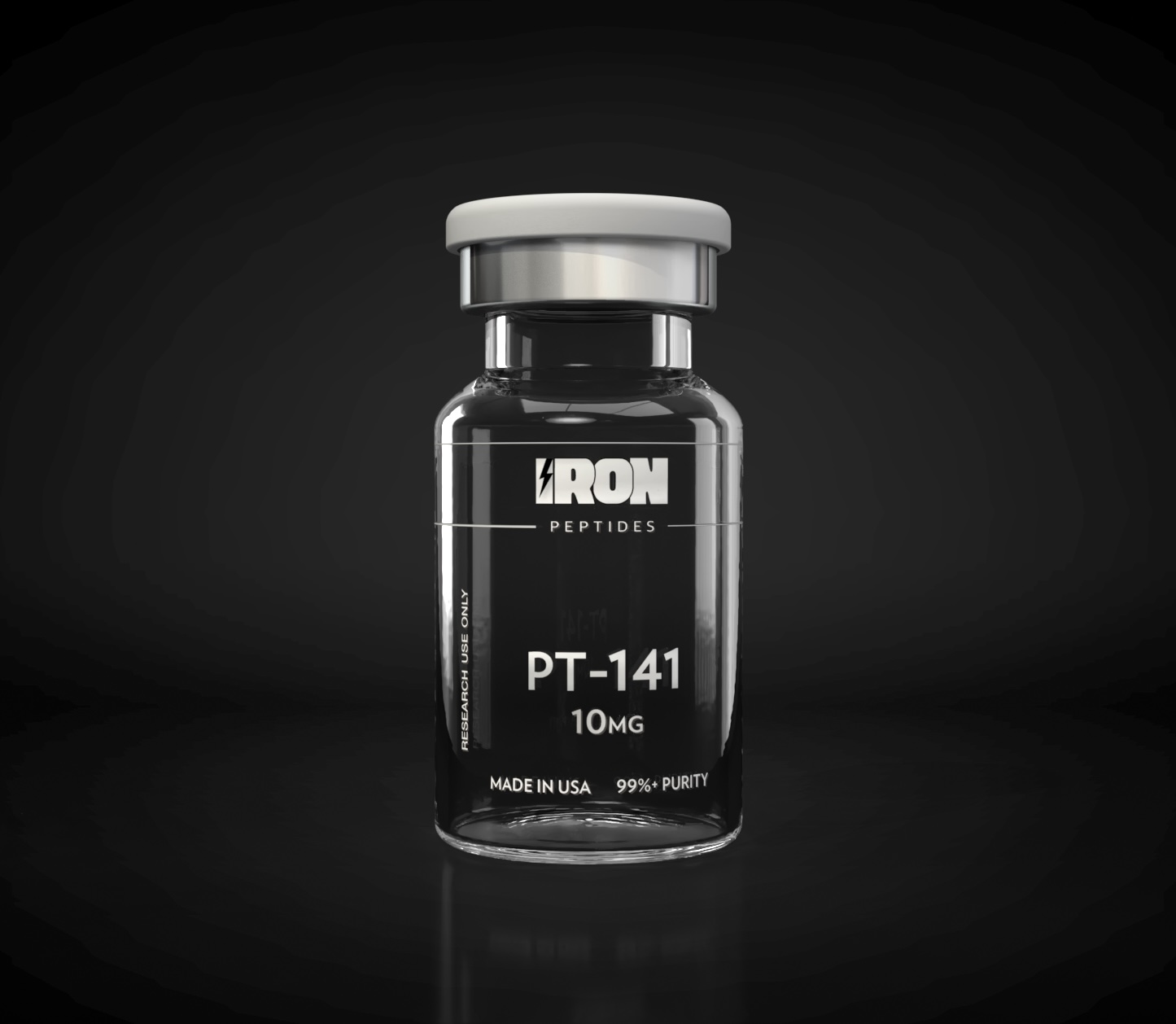
PT-141 10MG
$69.99
Shipping Calculated at checkout.
Availability: 47 in stock
FREE SHIPPING
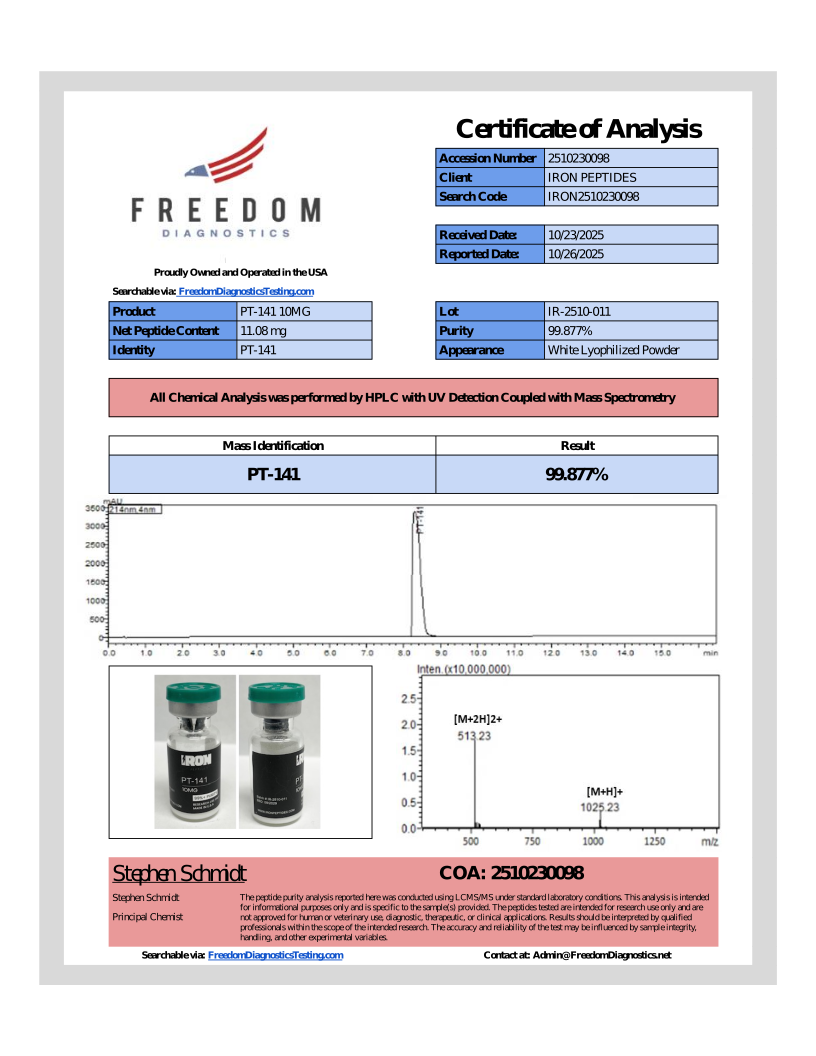
99%+ PURITY
MADE IN USA

What is PT-141 10MG?
Introduction
PT-141, commonly referred to as bremelanotide, is a laboratory-synthesized peptide that originated from structure activity optimization of melanocortin signaling molecules. It belongs to a class of compounds designed to interact with specific receptors involved in neurobehavioral regulation, distinguishing it from agents that primarily target peripheral physiological pathways. Its molecular design allows it to cross central regulatory circuits, making it a subject of interest in experimental and pharmacological research contexts focused on central signaling mechanisms. Within scientific literature, PT-141 has been explored for its receptor selectivity, signaling bias, and central nervous system engagement under controlled conditions. Research discussions often emphasize its unique interaction profile within the melanocortin receptor family and its ability to influence centrally mediated response patterns without relying on direct hormonal or vascular modulation. As a result, PT-141 continues to be referenced in academic and investigational frameworks examining neuropeptide-based modulation strategies, rather than as a generalized therapeutic agentMechanism of action
Central Melanocortin Receptor Binding
This receptor engagement occurs predominantly within discrete brain nuclei where melanocortin signaling contributes to integrative neuroregulatory processes. The interaction reflects ligand receptor specificity that supports controlled activation without broad systemic involvement, allowing focused modulation of central signaling environments.Second-Messenger Pathway Activation
Signal propagation following receptor engagement involves amplification through intracellular mediator systems that regulate transcriptional responsiveness and synaptic signaling efficiency. These cascades contribute to adaptive changes in neuronal responsiveness rather than immediate peripheral physiological effects.Hypothalamic–Limbic Network Integration
Neural communication across these regions facilitates coordinated processing of internal signals, enabling synchronized responses across motivation-related and autonomic control centers. Such integration underscores the importance of circuit-level coordination in centrally mediated signaling.Receptor-Driven Functional Signaling Profile
This mechanism illustrates a model of targeted neuropeptide signaling in which functional outcomes arise from receptor-selective activation and controlled intracellular communication dynamics rather than diffuse biological stimulation.
Chemical Structure of PT-141 10MG
Sequence: Ac-Nle-Asp(1)-His-D-Phe-Arg-Trp-Lys (1)
Molecular Formula: C50H68N14O10
Molecular Weight: 1025.182 g/mol
PubChem CID: 9941379
CAS Number: 189691-06-3
Properties
Monoisotopic Mass: 1024.52428442
Polar Area: 379
Complexity: 1950
XLogP: 0.7
Heavy Atom Count: 74
Hydrogen Bond Donor Count: 13
Hydrogen Bond Acceptor Count: 12
Rotatable bond count: 17
Pubchem LCSS : Bremelanotide Laboratory Chemical Safety Summary
Identifiers
| Field | values |
| CID | 9941379 |
| InChl | InChl=1S/C50H68N14010/c1-3-4-16-35(58-29(2)65)43(67)64-41-25-42(66)54-20-11-10-18-37(49(73)74)60-46(70)39(23-31-26-56-34-17-9-8-15-33(31)34)62-44(68)36(19-12-21-55-50(51)52)59-45(69)38(22-30-13-6-5-7-14-30)61-47(71)40(63- 48(41)7224-32-27-53-28-57-32/h5-9,13-15,17,26-28,35-41,56H,3-4, 10-12,16, 18-25H2,1-2H3, (H,53,57) (H,54,66) (H,58,65) (H,59,69)(H,60,70)(H,61,71) (H,62,68)(H,63,72)(H,64,67) (H,73,74) (H4,51,52,55)/t35-,36-,37-, 38+, 39-,40-,41-/m0/s1
|
| InChiKey
|
FFHBJDQSGDNCIV-MFVUMRCOSA-N |
| Isometric SMILES | CCCCIC@@H](C(=O)N[C@H]1CC(=O)NCCCC[C@H](NC(=O)[C@@H](NC(=0)
[C@@H|NC(=O)[C@H]NC(=0)[C@@H](NC1=0)CC2=CN=CN2)CC3=CC =CC=C3)CCCN=C(N)N)CC4=CNC5=CC=CC=C54)C(=0)0)NC(=0)c |
| Canonical MILES | CCCCC(C(=O)NC1CC(=O)NCCCCC(NC(=0)C(NC(=0)C(NC(=0)C(NC(=O)C(NC1=0)CC2=CN=CN2)CC3=CC=CC=C3)CCCN=C(N)N)CC4=CNC5=CC=CC=C54)C(=0)OJNC(=0)C |
| JPAC Name | (35,65,9R,12S, 15S,23S)-15-[[(2S)-2-acetamidohexanoyl]amino]-9-
benzyl-6-[3-diaminomethylideneamino)propyl]-12-(1H-imidazol-5-ylmethyl)-3- (1H-indol-3-ylmethyl)-2,5,8, 11, 14,17-hexaoxo-1,4,7,10, 13, 18-hexazacyclotricosane-23-carboxylic acid |

What Are the Effects of PT-141 10MG?
PT-141 as a Modulator of Sexual Arousal
PT-141 has been investigated for its role in centrally mediated sexual arousal pathways, primarily through activation of melanocortin receptors, with particular emphasis on MC4R signaling within hypothalamic and limbic circuits involved in motivational behavior [1,2]. Preclinical studies have demonstrated that melanocortin receptor agonism is associated with measurable changes in sexual behavior and arousal responses in animal models, supporting a mechanism that operates independently of peripheral vascular modulation [3,4].
Clinical investigations in men with erectile dysfunction unresponsive to phosphodiesterase type-5 inhibitors have reported that intranasal administration of PT-141 produced erections sufficient for intercourse in a subset of participants, with outcomes showing a clear dose-dependent relationship [5]. These findings highlighted the relevance of centrally acting compounds for research into sexual dysfunction where neurogenic mechanisms may predominate.
The figure shows a dose-dependent increase in duration of erectile response following PT-141 administration compared with placebo. Higher doses (≥3.0 mg) are associated with significantly prolonged erectile time, while the inset indicates a reduction in time to first erection as dose increases, supporting a centrally mediated, dose-responsive effect.
PT-141 has also been evaluated in female sexual dysfunction research, including randomized dose-finding studies in premenopausal women that examined validated psychometric endpoints related to desire and arousal [6,7]. Subsequent development efforts expanded interest in subcutaneous formulations, prompting further investigation into pharmacokinetic behavior, trial design considerations, and outcome assessment strategies [8]. Collectively, ongoing translational research continues to explore the broader role of melanocortin signaling in reward processing and motivational states, providing mechanistic context for PT-141–associated behavioral observations [9,10].
Hemorrhagic Shock Modulation
PT-141 related melanocortin agonists have been explored within hemorrhagic shock and acute hypovolemia research paradigms, based on their capacity to engage central and peripheral melanocortin receptor signaling networks. Particular attention has been directed toward MC1R- and MC4R-associated pathways, which are implicated in the regulation of inflammatory responses, autonomic balance, and tissue resilience during ischemic stress conditions [11,12]. These mechanisms have positioned melanocortin peptides as experimental tools for studying systemic responses to severe blood loss rather than as conventional volume replacement strategies.
Preclinical investigations have suggested that activation of melanocortin receptors may modulate cardiovascular reflexes, cytokine release, and microcirculatory function following hemorrhage, thereby influencing short-term survival and organ perfusion in animal models [13,14]. Within this research space, a structurally modified analog, commonly cited as PL-6983, has been described as exhibiting enhanced stability and receptor interaction profiles suitable for experimental evaluation under shock conditions [15]. Such analogs have been examined for their ability to attenuate hypotension and metabolic derangements associated with acute blood volume depletion.
Additional studies have proposed that melanocortin-based signaling may interact with hypothalamic pituitary adrenal axis activity and sympathetic outflow, contributing to coordinated systemic adaptations during hemorrhagic stress [16,17]. Although these findings remain confined to experimental and translational research contexts, they have expanded scientific understanding of how melanocortin receptor modulation influences physiological responses to ischemia and trauma, independent of direct fluid resuscitation or vasopressor mechanisms.
PT-141 and Infection
It has been examined in the context of infectious and inflammatory disease models, reflecting its broader role in innate immune regulation. Experimental studies have demonstrated that melanocortin peptides can influence host–pathogen interactions by modulating immune cell activity rather than exerting direct antimicrobial effects. In a rat model of Candida albicans associated vaginitis, the synthetic melanocortin peptide CKPV was evaluated for its capacity to alter inflammatory responses and fungal burden, with findings suggesting involvement of macrophage phenotype regulation and cytokine signaling pathways [18,19].
Further investigations into melanocortin biology have highlighted its relevance in infection-associated inflammation, particularly through effects on macrophage polarization, neutrophil recruitment, and resolution-phase immune responses [20,21]. By engaging melanocortin receptors expressed on immune cells, these peptides have been shown to shift inflammatory profiles toward regulatory or reparative states in preclinical models, thereby supporting tissue homeostasis during infectious challenges [22]. Collectively, this body of work has reinforced interest in melanocortin pathways as adjunct research targets within infection and inflammation biology, offering mechanistic insight into immune modulation independent of conventional antimicrobial strategies [23,24].
PT-141 and Cancer/Photoprotection
It has also been extensively investigated within photoprotection and dermatologic oncology research, owing to its central role in regulating melanogenesis, ultraviolet (UV) response pathways, and genomic stability in cutaneous cells. Experimental studies indicate that activation of MC1R enhances nucleotide excision repair capacity, reduces oxidative DNA damage, and modulates cellular stress responses following UV exposure, thereby contributing to protective mechanisms against mutagenesis [25,26]. Genetic polymorphisms affecting MC1R function have been correlated with impaired pigmentation responses and elevated susceptibility to melanoma and non-melanoma skin cancers, independent of UV exposure intensity [27,28]. These observations have sustained interest in melanocortin pathway modulation as a framework for understanding individual variability in skin cancer risk and for exploring photoprotective signaling mechanisms relevant to prevention-oriented research [29,30].
Area of research
PT-141 has garnered significant interest in investigations of sexual dysfunction through its modulation of neurobehavioral pathways, primarily via activation of melanocortin receptors such as MC3R and MC4R in the central nervous system.(31,32) In addition to this primary focus, melanocortin receptor biology opens broader experimental opportunities. For instance, dysfunction in MC4R signaling has been linked to certain forms of early-onset obesity, and PT-141 provides a valuable agonist framework for exploring melanocortin pathways in energy homeostasis and appetite regulation.(33,34)3,4 Similarly, MC1R signaling has been implicated in mechanisms related to pain modulation, inflammation, renal pathology, and various immune-related processes, positioning melanocortin agonists like PT-141 as useful tools for studying these interconnected pathways.(35,36)
In preclinical models (e.g., mice), PT-141 demonstrates favorable characteristics, including minimal observed adverse effects, low oral bioavailability, and excellent subcutaneous bioavailability.(37) However, dosage extrapolations from per-kg body weight in mice do not directly translate to humans due to species-specific differences in pharmacokinetics and receptor dynamics.(38)
References
- Cone RD. The melanocortin receptors: agonists, antagonists, and the hormonal control of pigmentation. Endocr Rev. 2006;27(7):736-49.
- Mountjoy KG, Robbins LS, Mortrud MT, Cone RD. The cloning of a family of genes that encode the melanocortin receptors. 1992;257(5074):1248-51.
- Pfaus JG, Shadiack A, Van Soest T, Tse M, Molinoff P. Selective facilitation of sexual solicitation in the female rat by a melanocortin receptor agonist. Proc Natl Acad Sci U S A. 2004;101(27):10201-4.
- Hadley ME, Haskell-Luevano C. The proopiomelanocortin system. Ann N Y Acad Sci. 1999;885:1-21.
- Diamond LE, Earle DC, Heiman JR, Rosen RC, Perelman MA. An evaluation of the safety, tolerability, and efficacy of PT-141 in men with erectile dysfunction refractory to sildenafil. Int J Impot Res. 2004;16(5):407-12.
- Kingsberg SA, Clayton AH, Pfaus JG. The female sexual response: current models and perspectives. J Sex Med. 2015;12(12):2159-67.
- Clayton AH, Goldfischer ER, Goldstein I, et al. Bremelanotide for female sexual dysfunction: randomized dose-finding studies. J Womens Health (Larchmt). 2016;25(8):837-44.
- Kingsberg SA, Simon JA, Goldstein I, et al. Clinical development of bremelanotide for hypoactive sexual desire disorder. Sex Med Rev. 2019;7(2):223-31.
- Adan RAH, Tiesjema B, Hillebrand JJ, et al. The MC4 receptor and control of appetite. Br J Pharmacol. 2006;149(7):815-27.
- Mountjoy KG. Distribution and function of melanocortin receptors within the brain. Adv Exp Med Biol. 2010;681:29-48.
- Catania A, Lonati C, Sordi A, Carlin A, Leonardi P, Gatti S. The melanocortin system in control of inflammation. 2010;10:1840–53.
- Cone RD. Studies on the physiological functions of the melanocortin system. Endocr Rev. 2006;27(7):736–49.
- Guarini S, Cainazzo MM, Giuliani D, Mioni C, Altavilla D, Squadrito F, et al. Adrenocorticotropin reverses hemorrhagic shock in rats via melanocortin receptors. Proc Natl Acad Sci U S A. 1999;96(14):8509–14.
- Giuliani D, Ottani A, Mioni C, Bazzani C, Galantucci M, Minutoli L, et al. Protective effects of melanocortins in hemorrhagic shock. 2007;27(4):444–52.
- Haskell-Luevano C, Holder JR. Modified melanocortin peptides for experimental shock models. 2004;25(6):1001–8.
- Gatti S, Lonati C, Acerbi F, Sordi A, Leonardi P, Catania A. Anti-inflammatory action of melanocortins in systemic stress conditions. Ann N Y Acad Sci. 2010;1193:77–84.
- Getting SJ. Targeting melanocortin receptors as potential novel therapies. Pharmacol Ther. 2006;111(1):1–15.
- Cutuli M, Cristiani S, Lipari L, et al. Anti-inflammatory and antifungal activity of a melanocortin-derived peptide in experimental Candida albicans Peptides. 2000;21(7):1017–22.
- Catania A, Gatti S, Colombo G, Lipton JM. Targeting melanocortin receptors as a novel strategy to control inflammation. Pharmacol Rev. 2004;56(1):1–29
- Getting SJ, Christian HC, Lam CW, et al. Redundancy of melanocortin receptors in the anti-inflammatory actions of melanocortin peptides. Proc Natl Acad Sci U S A. 2003;100(3):1418–23.
- Montero-Melendez T. ACTH: the forgotten therapy. Semin Immunol. 2015;27(3):216–26.
- Getting SJ. Melanocortin peptides and innate immunity. Curr Opin Pharmacol. 2002;2(4):339–43.
- Catania A. The melanocortin system in leukocyte biology. J Leukoc Biol. 2007;81(2):383–92.
- Brzoska T, Luger TA, Maaser C, Abels C, Böhm M. Alpha-melanocyte–stimulating hormone and related peptides: a new class of anti-inflammatory drugs. Ann Rheum Dis. 2008;67(Suppl 3):iii85–8.
- Kadekaro AL, Wakamatsu K, Ito S, et al. Regulation of melanocyte function by melanocortin-1 receptor signaling: implications for UV-induced DNA damage repair. FASEB J. 2010;24(9):2855–64-
- Bohm M, Wolff I, Scholzen TE, et al. Alpha-melanocyte-stimulating hormone protects from ultraviolet radiation-induced apoptosis and DNA damage. J Biol Chem. 2005;280(7):5795–802.
- Valverde P, Healy E, Jackson I, Rees JL, Thody AJ. Variants of the melanocyte-stimulating hormone receptor gene are associated with red hair and fair skin in humans. Nat Genet. 1995;11(3):328–30.
- Raimondi S, Sera F, Gandini S, et al. MC1R variants, melanoma and red hair color phenotype: a meta-analysis. Int J Cancer. 2008;122(12):2753–60.
- Kadekaro AL, Leachman S, Kavanagh RJ, et al. Melanocortin-1 receptor genotype is associated with DNA repair capacity and risk of melanoma. J Invest Dermatol. 2010;130(4):1088–93.
- Dessinioti C, Stratigos AJ. Melanocortin-1 receptor variants and melanoma risk. Br J Dermatol. 2014;170(4):812–9.
- Molinoff PB, Shadiack AM, Earle D, Diamond LE, Quon CY. PT-141: a melanocortin agonist for the treatment of sexual dysfunction. Ann N Y Acad Sci. 2003;994:96-102.
- Kingsberg SA, Clayton AH, Pfaus J. Bremelanotide for the treatment of hypoactive sexual desire disorder: two randomized phase 3 trials. Obstet Gynecol. 2019;134(5):899-908.
- Hadley ME, Haskell-Luevano C. The proopiomelanocortin system. Ann N Y Acad Sci. 1999;885:1-21.
- Yeo GSH, Chao DHM, Siegert AM, et al. The role of the melanocortin system in metabolic disease: new developments and advances. Nat Rev Endocrinol. 2021;17(8):487-501.
- Getting SJ. Targeting melanocortin receptors as a novel strategy to control inflammation. Pharmacol Ther. 2006;111(1):1-15.
- Catania A. The melanocortin system as a target for anti-inflammatory treatment. Recent Pat Endocr Metab Immune Drug Discov. 2008;2(2):92-99.
- Diamond LE, Earle DC, Garcia WD, Spana C. Co-administration of low doses of intranasal PT-141, a melanocortin receptor agonist, and sildenafil to men with erectile dysfunction results in an enhanced erectile response. Urology. 2005;65(4):755-759.
- Reagan-Shaw S, Nihal M, Ahmad N. Dose translation from animal to human studies revisited. FASEB J. 2008;22(3):659-661.
 PT-141 10MG
| 5 star | 0% | |
| 4 star | 0% | |
| 3 star | 0% | |
| 2 star | 0% | |
| 1 star | 0% |
Sorry, no reviews match your current selections

TrustScore 4.6
DH
Drew Hahn
2025-09-09

I decided to try something new with…
I decided to try something new with Iron Peptides, and it has already been very beneficial. Since starting, I’ve noticed many positive effects. I feel motivated to continue, and I’m confident I’ve found the right company to trust on my personal journey—Iron Peptides.
y
yari
2025-09-07
The products
The products, services and information is exceptional

Karla Rodriguez
2025-09-07
Fist time trying peptides to see what…
Fist time trying peptides to see what all the hype was about. And. I AM HOOKED! Have never felt. Better. 5 months after my neck surgery and I feel amazing. Recovery was easy and I have all my strength back!!